
Australia’s Skills Shortage: Why Thousands of Overseas-Trained Workers Still Can’t Work in Their Profession
Australia is facing one of its most significant skill shortages in decades. Construction sites are delaying projects, mining companies are struggling to fill technical roles, and hospitality businesses rely heavily on temporary staff to keep operating.
Yet, paradoxically, more than 600,000 skilled migrants already living in Australia remain unable to work in the very professions they were trained for. Many are working well below their qualification level, despite having years—sometimes decades—of experience.
Recent analyses cited by The Guardian show that nearly 45% of permanent migrants are employed below their qualification. Many were trained overseas in areas Australia urgently needs — including engineering, health, trades and automotive — but remain locked out of their profession due to complex, slow and costly skills recognition processes. Nearly 80,000 engineers, 50,000 health professionals, and over 200,000 professionals in management and commerce are part of this untapped workforce.
A Complex and Costly System
One of the biggest barriers is the complex and fragmented system for recognising overseas qualifications. Migrants must navigate multiple authorities, technical assessments, licensing bodies, and thousands of dollars in fees — often with little guidance or consistency.
For some fields, there is currently no national subsidy or loan scheme to help them cover these costs.
Overall, overseas-trained professionals can wait more than a year and spend tens of thousands of dollars before receiving the authorisations they need to work. For many new arrivals, these barriers are simply too high — forcing them into survival jobs far below their training and experience.
This underutilisation of talent has a national cost and the consequences are significant:
- Migrants face underemployment, lower wages, and lost career progression.
- Employers face critical staff shortages that slow down projects and service delivery.
- The Australian economy misses out on an estimated $9 billion annually because skilled migrants aren’t fully utilised.
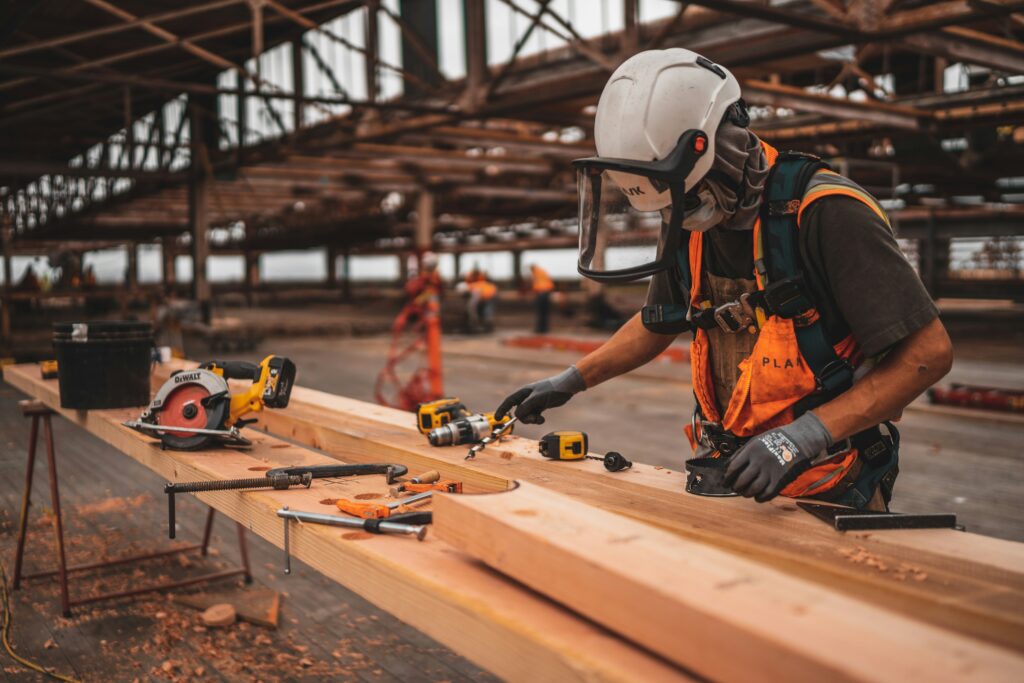

The sectors hit hardest: construction, mining, trades and hospitality
While labour shortages affect almost every part of the economy, some sectors are under acute pressure.
1. Construction
Australia’s construction industry is experiencing unprecedented demand, driven by infrastructure projects and housing shortages. Carpenters, bricklayers, steel fixers, and electricians are in particularly short supply — trades that many overseas workers already hold qualifications in, but cannot immediately practise.
2. Mining & Resources
Western Australia and Queensland mining sectors are desperate for skilled mechanical fitters, boilermakers, diesel mechanics and electricians. These roles are essential for operational safety, yet mines regularly report delays due to lack of qualified labour.
3. Trades & Technical Roles
Occupations such as welders, automotive technicians, metal fabricators, panel beaters and refrigeration specialists are on the national skills priority list. Many migrants from Africa, Asia, Europe and the Pacific Islands have extensive experience in these trades but struggle to obtain Australian certification.
4. Hospitality & Food Services
Chefs, cooks and bakers remain in chronic shortage. Skilled migrants fill a large portion of these roles, yet many report lengthy recognition processes before they can work in positions matching their expertise.
Why Skills Recognition matters
Skills recognition, including Recognition of Prior Learning (RPL), Skills Assessment and other assessment pathways, is designed to evaluate whether a worker’s overseas experience meets Australian industry standards.
This system should be a bridge between migrants’ existing skills and Australia’s labour needs.
However, the system is often inconsistent, time-consuming, and difficult to navigate. A unified national body — one of the recommendations highlighted in the Guardian article — could help simplify the process and make it fairer and faster.
An issue bigger than individuals: a national opportunity
The current mismatch between migrant expertise and Australian labour shortages is no longer a small administrative problem — it is a national economic and social issue.
Across the political spectrum, industry leaders agree: Australia needs a simpler, fairer, faster skills recognition system.
People are not asking for shortcuts; they are asking for clarity, consistency, and affordability — so they can contribute to the fields they were trained in, and so the country can unlock the highly skilled workforce it urgently needs.
As Australia moves forward with conversations around immigration, workforce shortages and economic resilience, the question becomes:
How long can the country afford to leave hundreds of thousands of skilled workers on the sidelines?
As Australia moves forward with conversations around immigration, workforce shortages and economic resilience, the question becomes:
How long can the country afford to leave hundreds of thousands of skilled workers on the sidelines?
Need help with skills recognition in australia ?
You can check your eligibility by clicking on the bouton below